I am super excited to share these tips with you. After 13 years in the classroom I have learned a thing or two about how to fundraise and mobilize resources for my students. I have always enjoyed STEAM and hands-on learning-which I incorporate into my project based learning units. However, one challenge I often ran into was gathering enough resources for my classes of 32 students. I usually spent my own money to get necessary resources. Yet, eventually it began to add up and I found myself maxing out credit cards for my students.
That’s when I knew a change had to come and I began researching other ways to get needed resources for my class. Today I will be sharing exactly how I was able to continue providing for my class without hurting my pockets.
1. First Inventory and Assess your Classroom Needs.
First, pull out your curriculum map and school calendar. Begin thinking ahead about what resources you may need throughout the year. Remember to think about each PBL unit, STEAM lesson, an hands-on activity, and cultural heritage events. Next, start creating a list of items you will need and you can even organize the items by month. Last, check for the resources you already have and cross them off your list. Finalize your resource list and read on to the next steps.
2. Create A DonorsChoose Project
Three years into teaching I learned about DonorsChoose. They are an organization that supports the funding of classroom resources throughout the U.S. It is quite simple to create a project and could takes only 15-45 minutes to submit your project (depending on how many resources you are searching for).
The first step is to head over to donorschoose.com. Then with the list you created, select the items your class needs. Once you submit your project it can take a few days for it to be approved. When it is approved it will be active for your community and DonorsChoose donors to see. So be sure to share it-this way your project could get funded in no time at all.

3. Create An Amazon Wish List
First go to Amazon.com and create a wish list clearly titled “Your Name Classroom Wish List” i.e Ms. Beverly’s Class Wish List or any title that will make your list easily identifiable to your community.
After you create your list-begin selecting each item and add it to your wish list. Once you’ve added everything to your wish list. Share it far and wide. Share it in your class newsletter, with your friends, family, and on your social media. You’ll be surprised whose willing to support you and your students.

4. Start A GoFundMe
First, calculate how much the items on your list will cost and then create a GoFundMe for that amount + the percent they take out for using their service (which is 2.9% payment processing fee and 30 cents for each donation).
Include the supply list in your request and provide enough details for people to understand the need. However, to ensure everyone’s safety, be cautious not to share any information using your school or students name.
5. Include Recyclable Household Items
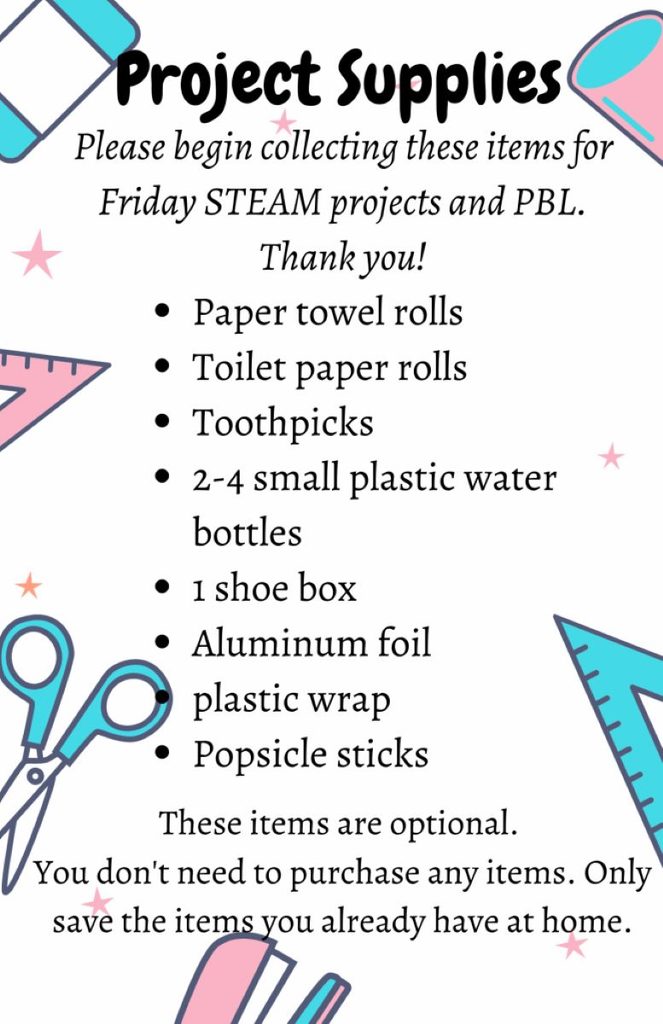
PBL and STEAM require creativity so be sure to include recyclable household items on your list. Doing this will ensure creativity and it opens the door for EVERYONE to contribute without spending a dime.
Oftentimes parents want to help but do not know how. It is very important to include some items on your list that do not cost any money such as: shoe boxes, toilet paper rolls, and empty water bottles to allow all families to participate no matter their financial means.
I’ve included my go to recyclable supplies list above. Check it out.
6. Create A Space for Collection
A great way to encourage donations is to create a designated space in your classroom for them. This space will allow you and students a special area to collect all project supplies. This space will serve as a visual and physical reminder that the class is working together toward a common goal of contributing to the class community.

7. Give a Heartfelt Thank You! (gratitude always rewards)
I know we all know this one. But seriously a thank you card, an email, or letter goes a long way. Giving a heartfelt thank you not only shows your appreciation but it makes the giver feel good about giving. People like to give when they trust their support is being authentically put to use and appreciated.
I’ve also found that expressing gratitude leads to even more rewards.
8. Ask Your Admin
Finally, ask your admin. I know this one is tough, because we’ve usually already exhausted this step. But, it doesn’t hurt to ask, to ensure there really aren’t any extra funds and resources available. Oftentimes schools find unused grants that they scramble to use before they expire. So try asking for what you need and you may be pleasantly surprised (or sadly confirmed).
It doesn’t hurt to ask. My mother always says “closed mouths don’t get fed” so advocate for yourself and your students….and ask.
Those are my 8 tips. I hope they can be helpful for you and your class. Please share which one you liked most or have already tried in the comments below.
I truly appreciate you visiting my blog. You can also find me on Instagram and soon to come YouTube.

Anjalee Beverly is a fourth-grade teacher, Project-Based Learning coach, college lecturer, and educational consultant with 18+ years of experience in education. Her work is rooted in the belief that students deserve learning experiences that honor their strengths, stories, cultures, languages, and lived experiences. Through teaching, coaching, speaking, and professional learning, she helps educators design classrooms where students feel seen, challenged, and capable.


