
After 10 years of being a PBL coach and teacher practitioner I have gathered a few must-have essentials to support my planning along the way.
I made my first PBL binder 8 years ago. I wanted a place to organize my standards and planning documents. I designed this binder based on what items I genuinely needed to build a successful PBL unit. I soon realized this binder could also help other teachers so I began making a binder for every grade level team I coached.
Today, I will share a few of the essentials I use to create my PBL binder and I will briefly explain how I use them.
1. School Calendar
It is so important to have a copy of the school’s calendar. The calendar includes important dates such as: holidays, assemblies, conferences, testing. cultural heritage months, and so much more. I use the calendar to help me design a PBL unit calendar with all stakeholders in mind. For example, if I notice a holiday or conference week is approaching I can predict that a large chunk of the day may be dedicated to these items and could potentially take away from class time, consequently I won’t schedule longer lessons on project build days on these dates.
The school calendar also really helps me align my standards with cultural heritage months. This allows me to create whole PBL units that can build on schema and connections from both standards and the culture being honored.
2. All Standards
I use standards as my guide to curate all lessons and units. Within the standards section of my PBL binder I include all common core standards for reading, writing, grammar, and math. I also include Next Generation Science Standards and the country/states social studies standards. If you work in a dual language school which I always have, I also include the dual language standards in this section. This really helps to have them all in one place because I usually choose one standard per content area to guide/teach for each PBL unit.
3. Resource Catch All: Rubrics/Check-list/Quotes…..
In addition to my PBL teaching experience, I also completed PBL Coaching training via PBLWorks through the Buck Institute. These training sessions came with a host of resources. One that I love is the Gold Standard Teaching PBL rubric. This rubric supports us as teachers in locating where we are in our PBL teaching and planning design journey. I include the Gold Standard PBL graphic and Gold Standard Project Design Rubric in my essentials binder, both of which can be found on the PBLWorks website.I also like to save rubrics from past PBL units to help me build new rubrics and I also share these rubrics with teachers I coach.
Within this section I also like to add anything I consider to be a resource. It’s like a catch all resource section. I include copies of book pages, articles, and my Project vs. PBL check-list (you can get this for free by joining my mailing list).
4. Backwards Planner
I always backwards plan. I am currently using a backwards planning graphic organizer that my colleague and friend, Madison Bruno created. The backwards planner allows teachers to think with the end in mind. Using our standards as a guide. We think about what students need to know by the end of the unit and how we want them to show their learning. From this point we identify essential questions and benchmarks which we later use to create mini-lessons to fill into our blank calendar.
5. Blank Calendar
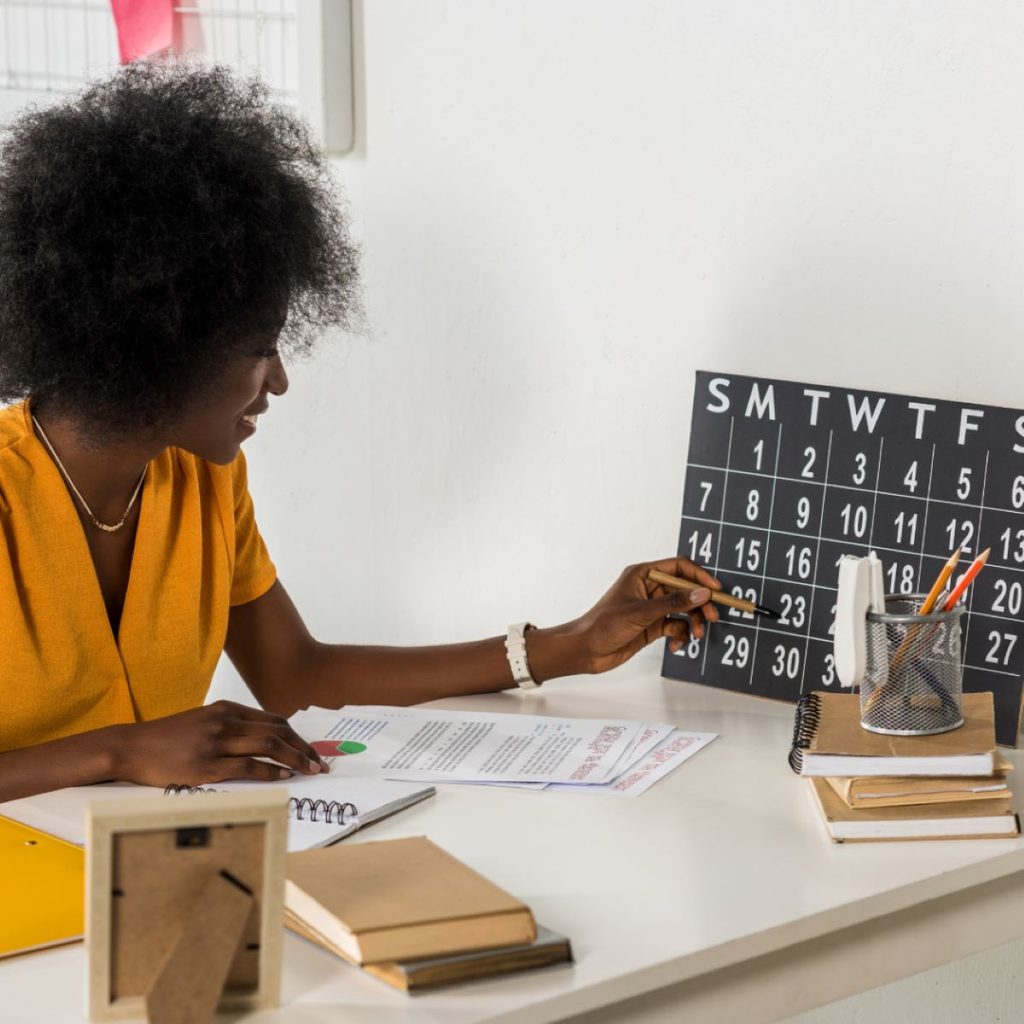
The blank calendar is a great rough draft to organize my/teams thinking around our PBL unit plan. I use it to write in ideas, possible lessons, and to gauge how long each PBL unit will take to complete. I also use a digital calendar but I prefer a blank hardcopy for the beginning stages of planning.
So there you have it: my Project Based Learning Binder Essentials. Please, let me know if/how this was helpful.
Visit me on Instagram for more PBL content. Join my mailing list for my free PBL resources and stay tuned for my upcoming PBL Lesson Planning Master Class.
Anjalee Beverly is a fourth-grade teacher, Project-Based Learning coach, college lecturer, and educational consultant with 18+ years of experience in education. Her work is rooted in the belief that students deserve learning experiences that honor their strengths, stories, cultures, languages, and lived experiences. Through teaching, coaching, speaking, and professional learning, she helps educators design classrooms where students feel seen, challenged, and capable.


